DESMA CENTER AND THE MINISTRY OF TOURISM HOLD THE FIRST DKT MEETING TO DEVELOP A ROADMAP FOR STRENGTHENING TOURISM BUSINESS STANDARDS FOR 2026–2029

Author: Dani Fauzi, Program Officer
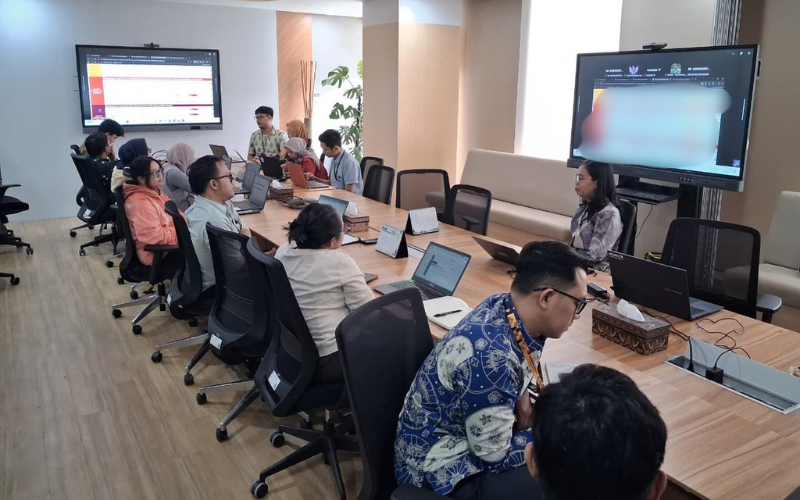
Jakarta, June 30, 2026 — The DESMA Center, together with the Team of the Assistant Deputy for Business Standardization and Certification, Office of the Deputy for Industry and Investment, Ministry of Tourism, organized a Focus Group Discussion (FGD-I) as part of the development of the 2026–2029 Roadmap for Strengthening Tourism Business Standards. The event took place at the Merdeka Building and served as a forum to align understanding regarding the conceptual foundation and direction for drafting the roadmap.
The discussion began with the issue of consistency regarding the terms “business standards” and “business activity standards,” which have different scopes and therefore need to be harmonized in implementing regulations to avoid confusion among business operators and regulators. Participants also emphasized the importance of defining the scope of tourism activities and mapping the Indonesian Standard Industrial Classification (KBLI) to the 13 types of tourism businesses as a foundation before technical standards are developed. Regulations for existing businesses are prioritized first, while the need for regulations for specific business types can be identified later.
During the discussion, the development of standards was guided by the principles of Risk-Based Business Licensing (PBBR) or “trust but verify”—that is, standards that are minimal, proportional, and tiered according to the scale and risk of the business. Participants highlighted the risk of overlap with sectoral obligations in other ministries and agencies, such as waste management, groundwater use, and food safety. Therefore, an inventory of existing regulations, the grouping of obligations, and a clear distinction between core tourism standards and sectoral obligations are crucial steps toward simplifying the burden on business operators.
DKT-I also discussed coordinated oversight among ministries and agencies using a mentoring approach, as well as the interconnection between standards and human resource development, vocational education, and investment competitiveness. The results of this discussion will serve as input for establishing a baseline and outlining the steps for refining subsequent documents.
.png)